
Category: Measurement
What the numbers mean, what they hide, and what to tell the person who asks.
Reach is not one number. Engagement rate depends entirely on who is counting. Most published benchmarks trace back to somebody’s blog post rather than a dataset anyone can inspect. The pieces here quote each platform’s own definitions, show the same campaign measured more than one way, and give you a method you can repeat on your own account.
The emphasis is on what to do when the numbers disagree, and on what to say to a founder or a client who has asked for the industry average. No analytics tool roundups, no invented benchmark tables, and no scolding about vanity metrics without evidence behind it.
-
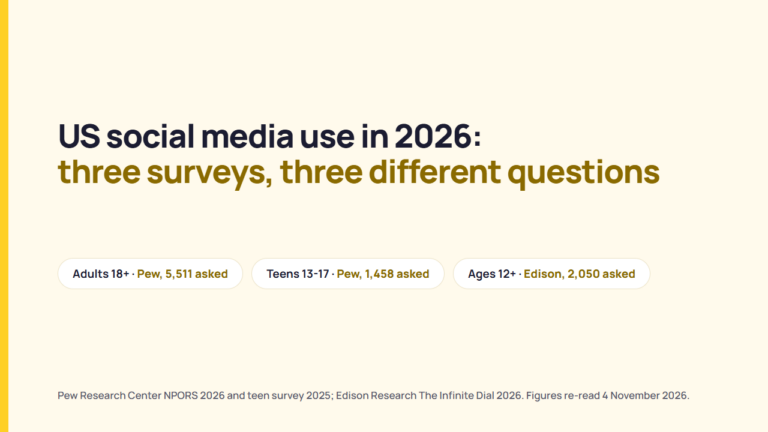
US social media use in 2026: what the Pew and Edison surveys actually report
US social media use 2026: Pew has Instagram at 51% of adults, Edison 54% of Americans 12+. Both…

·
-
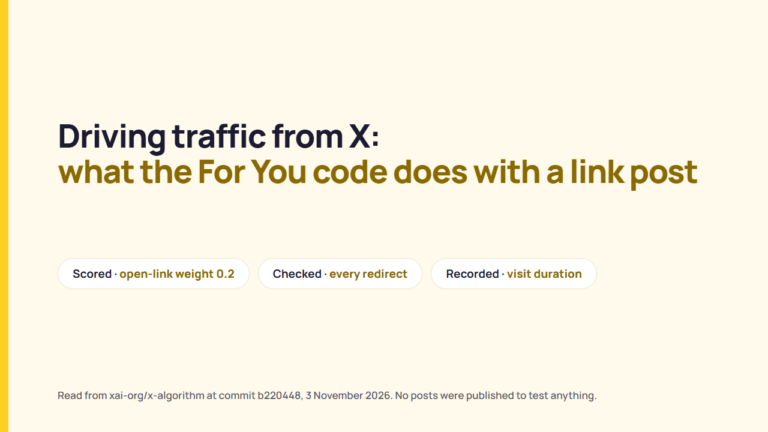
Driving traffic from X (Twitter): does X penalise links? What the 2026 For You code says
Does X (Twitter) penalize links? Its open-source For You code scores link opens, checks each redirect and records…
·
-
Your reporting history is shorter than you think
Instagram stores user metrics for 90 days. LinkedIn gives you a rolling twelve months. Facebook Pages keeps two…
·
-
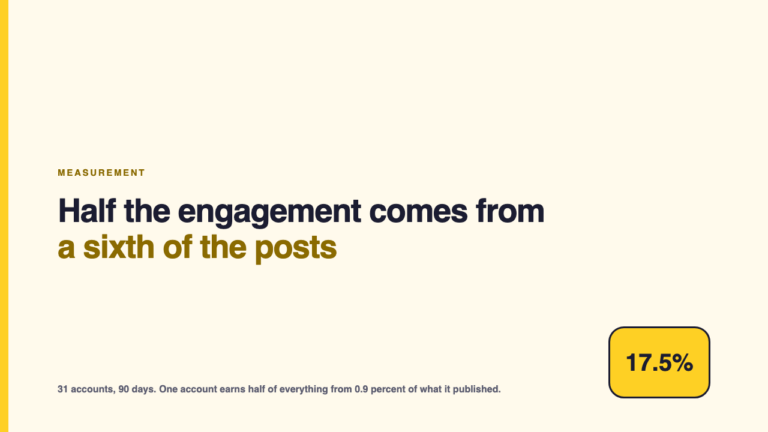
Half the engagement comes from a sixth of the posts
Across 31 public accounts and 90 days, the median account earns half its engagement from its best 17.5…
·
-
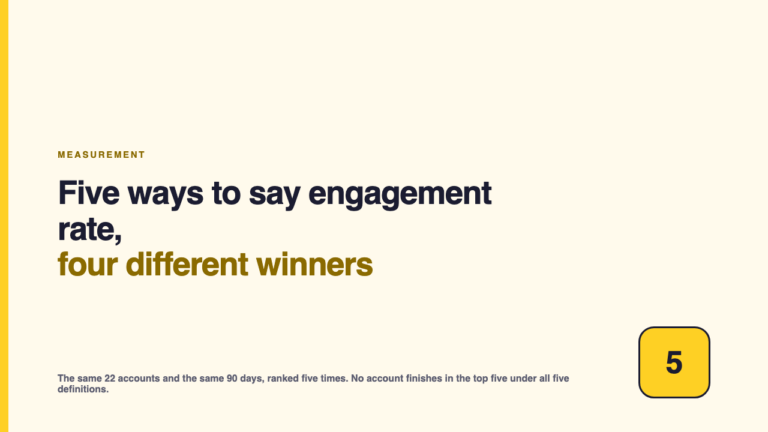
Five ways to say engagement rate, four different winners
The same 22 accounts, the same 90 days of posts, ranked five times under five common definitions of…
·
-
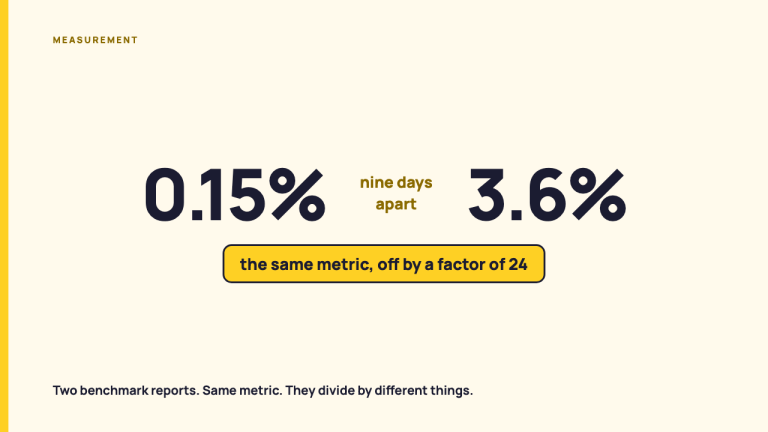
Where social media industry averages come from, and what to compare against instead
Two social media benchmark reports published nine days apart in January 2026 put the average Facebook engagement rate…
·