
Category: Platform Watch
What changed on the platforms, read properly, with what it means for the people posting.
Platforms change constantly, and most coverage of it is a rewritten press release. The posts here start from the primary document: an engineering post, a policy page, a system card, a statement with a date on it. Where a belief circulates without a source, we say so rather than repeating it. Where something genuinely changed, we say what it costs you to respond to it.
You will find claims traced back to their origin, dated records of what moved and when, and myths tested against evidence. You will not find predictions about unannounced features, or advice built on what the algorithm supposedly wants.
-
A Content ID Claim Is Not a Strike. YouTube’s Own Rules Keep Them Apart
YouTube documents Content ID claims and Community Guidelines strikes as separate systems with different consequences. Here is how…

·
-
Instagram’s Hidden Words Filter: What It Catches by Default
Instagram’s own announcements document what Hidden Words filters automatically, and what a manager still has to add as…
·
-
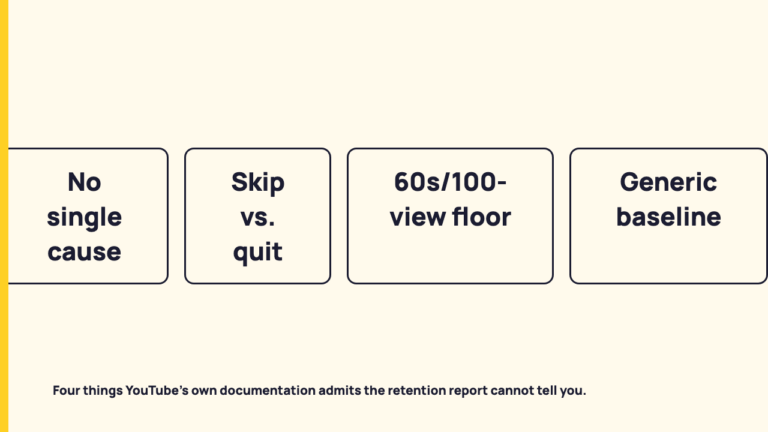
How to read a YouTube retention graph, and its four limits
YouTube documents exactly what its audience retention report measures. Here is what that documentation actually supports, and the…
·
-
The Account-Recovery Procedure Is Not a Crisis Statement
What Instagram, Facebook, LinkedIn, and YouTube document for account recovery, and what the published incident response frameworks say…
·
-
What YouTube has published about Shorts and long-form
YouTube’s own documentation on Shorts and long-form: what it states about recommendations, analytics and monetization, and where it…
·
-
What a platform’s earnings call can tell you, and can’t
Platform earnings calls and 10-Q filings sit under legal scrutiny, but one quoted line rarely means a strategy…
·
-
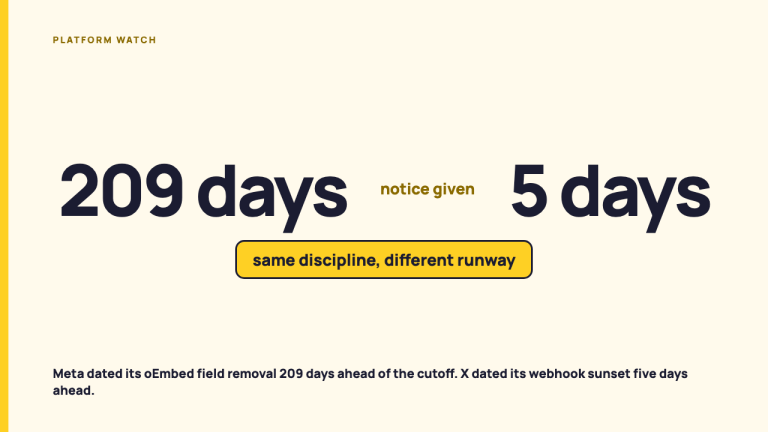
Read the developer changelog before it breaks your report
Platforms date every field and endpoint removal in their own developer changelogs, months ahead. This walks real entries…
·
-
Traffic labelled direct: what the referrer specification says
The referrer specification explains part of why social clicks arrive as direct, though not the part most posts…
·
-
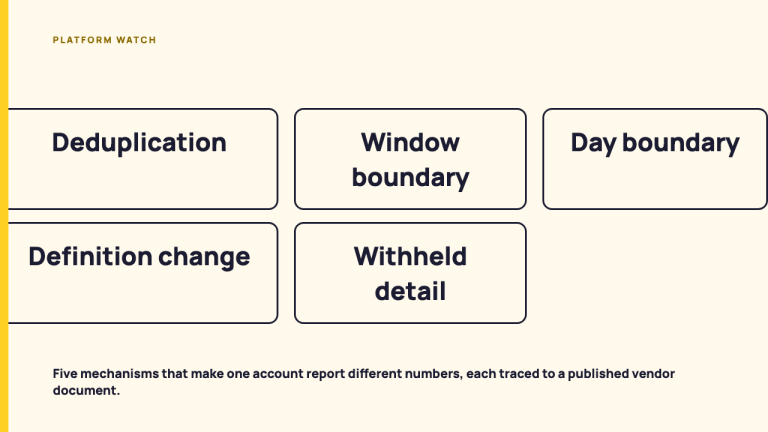
When the same account reports three different numbers
In-app insights, the business surface and the API disagree by design. Learn the documented reasons, windows, time zones…
·
-
The paid partnership label and the FTC disclosure standard
The endorsement guides set a standard for disclosure. The paid partnership label is a platform feature. Read side…
·